What does speed mean for storage solutions? When you’re dealing with data-intensive tasks, the difference between a good SSD and a great one isn’t simply about capacity—it’s about how fast you can access and write that data. The Patriot P320 512GB Internal SSD represents a notable option on the market for those who appreciate speed and efficiency.
This image is property of Amazon.com.
Overview of the Patriot P320
The Patriot P320 is a 512GB internal SSD that leverages the strength of NVMe PCIe Gen 3×4 technology, promising superior performance for your computing needs. This drive is crafted for those who demand more from their storage, whether you’re gaming, editing video, or running complex applications.
Key Features
You’d want to pay attention to a few standout features of this SSD. Here’s a breakdown:
Feature
Specification
Capacity
512GB
Sequential Read Speed (CDM)
Up to 3000MB/s
Sequential Write Speed (CDM)
Up to 2200MB/s
Interface
PCIe Gen3 x4
Form Factor
M.2 2280
NVMe Version
NVMe 1.3
Operating System Support
Windows 7/8.0/8.1/10/11
Having 512GB of space means you can store a plethora of files, from photos and videos to applications and games, making it a suitable choice for your desktop or laptop.
[aiwm-amazon-card title=”Patriot P320 512GB Internal SSD – NVMe PCIe Gen 3×4 – M.2 2280 – Solid State Drive – P320P480GM28″ image_url=”https://m.media-amazon.com/images/I/61mLgfAd5QL._AC_SL1200_.jpg” product_url=”https://www.amazon.co.uk/dp/B0D4RCRNHG?tag=dm5305-21″ original_price=”” discounted_price=”26.79″ currency=”GBP|£” availability=”In stock” disclaimer=”As an Amazon Associate, I earn from qualifying purchases”]
Speed: The Game Changer
When it comes to storage, speed is king. With sequential read speeds of up to 3000MB/s and write speeds reaching 2200MB/s, the Patriot P320 really shines in this regard.
What Does This Speed Mean for You?
Imagine the difference in your daily tasks. Whether you’re booting your computer or launching a resource-heavy application, the significantly faster load times can save precious moments, leading to increased productivity and an all-around smoother experience.
Installation and Compatibility
Getting this drive up and running is relatively straightforward if you’re somewhat familiar with computer upgrades. You will find this SSD compatible with most devices that utilize the 2280 M.2 form factor.
What to Expect During Installation
Locate Your M.2 Slot: Check your motherboard or laptop manual to find the M.2 slot.
Remove the Old Drive (If Necessary): If you’re replacing an existing drive, power down your machine and carefully remove the previous SSD.
Insert the Patriot P320: Align the notches on the SSD with the slot and gently insert it. Secure it with the screw provided, and you’re set.
Format the Drive: Once installed, don’t forget to format it in your operating system.
It’s always a good practice to have your data backed up before making hardware changes.
Performance in Real-World Scenarios
You might be curious how the Patriot P320 stands up in real-world use cases. Let’s break it down:
Gaming
The high read and write speeds translate into faster loading times for games. You’ll notice that levels load quicker, and textures can render faster, reducing lag and allowing you to immerse yourself in the action.
Content Creation
For those into video editing, graphics design, or any task that requires file manipulation, the Patriot P320 can handle large files with ease. You’ll find that transferring 4K video files is a breeze, allowing you to spend more time creating and less time waiting.
Everyday Computing
Even if gaming or content creation isn’t your focus, everyday tasks benefit from this SSD. Booting up your computer becomes a matter of seconds rather than minutes, and applications open in a flash. You’ll wonder how you ever managed without it.
This image is property of Amazon.com.
Reliability and Endurance
In addition to speed, reliability is crucial for any storage device. With the Patriot P320, you gain peace of mind. The drive utilizes advanced technologies that help ensure data integrity and protection.
Endurance Specifications
Specification
Rating
MTBF
1.5 million hours
Total Bytes Written
200 TBW
These specifications indicate a drive designed to last and handle significant data over its lifetime.
Price Point and Value
Finding an SSD that balances performance with cost can be challenging. With the Patriot P320, you may find that it sits comfortably within the mid- to high-end price range.
Is It Worth the Price?
Considering the attributes of speed, reliability, and capacity, many users agree that the P320 offers great value. When you put it next to competitors in the same price bracket, it frequently comes out on top, making it a solid investment for your tech setup.
This image is property of Amazon.com.
Comparison with Other SSDs
It’s always a smart move to look at how a product stacks up against the competition. When comparing the Patriot P320 with other SSDs on the market, a couple of top contenders often get mentioned:
Key Competitors
Product Name
Read Speed
Write Speed
Capacity
Patriot P320
Up to 3000MB/s
Up to 2200MB/s
512GB
Samsung 970 EVO
Up to 3400MB/s
Up to 2500MB/s
500GB
WD Black SN750
Up to 3470MB/s
Up to 3000MB/s
500GB
While some competitors offer slightly higher read/write speeds, the P320 generally maintains a competitive edge in price and reliability, earning it a noteworthy place among consumers.
Customer Feedback
Evaluating what people are saying after using the Patriot P320 is also critical.
Common Praises
Speed: Users frequently note the noticeable improvement in boot and load times.
Value for Money: Several reviews laud the balance of performance and pricing, leading many to consider purchasing a second for additional storage.
Easy Installation: First-time SSD installers often mention how straightforward it was to install the P320.
Constructive Critiques
Warmth Under Load: Some users have reported that the drive can get warm during intensive tasks, suggesting that adequate airflow around the SSD might be necessary.
Limited Write Endurance: A few users have expressed concern about total bytes written, though they acknowledged that for most home users, this won’t be an issue.
This image is property of Amazon.com.
Conclusion
The Patriot P320 512GB Internal SSD is a high-speed, reliable storage solution that packs a punch for various computing needs. From gamers to office workers, you’ll find this drive caters well to your requirements. The combination of speed, capacity, and reasonable pricing makes it a smart choice that stands out in the crowded SSD market.
Investing in a drive like the Patriot P320 is more than just an upgrade. It’s an improvement in your everyday digital experience that can make a real difference in how you use your device. With this drive in your setup, you may find that performance levels elevate, tasks become more manageable, and enjoyment of technology increases.
Ultimately, when it comes to solid-state drives, the Patriot P320 confidently earns its place as a worthy contender, providing speed and efficiency for your data storage needs. Whether you’re upgrading your existing setup or assembling a brand-new rig, this SSD deserves consideration. You’ll not only meet your storage requirements; you’ll likely exceed your expectations.
Disclosure: As an Amazon Associate, I earn from qualifying purchases.
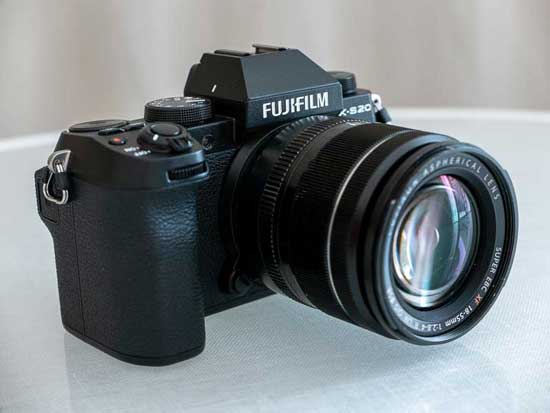
The X-S20 is a mid-range mirrorless digicam with an APS-C sensor which replaces the earlier X-S10 mannequin within the Fujifilm vary.
It retains the smaller physique and less complicated person interface of unique, once more marking fairly a departure from the standard Fujifilm blueprint for fanatic cameras which usually have a lot of exterior controls.
If in case you have ever been postpone by the extra complicated design and bigger dimension of fashions just like the X-T5 and X-Pro3 and like a extra DSLR-design, the X-S20 will probably be a greater match.
Though they appear nearly an identical side-by-side, there are numerous variations between the brand new XS20 and the earlier XS10 mannequin from 2020 on the subject of their core specs and options.
These embody the newest X-Processor 5 processor, extra subtle auto-focusing, further 6K video codecs, a model new devoted VLOG capturing mode for vlogging, considerably longer battery life, 7 stops of IBIS, a higher-resolution LCD display screen, a devoted headphone jack and seamless webcam connectivity.
When it comes to its advertising place, the X-S20 sits above the X-T30 II and under the X-T5 within the present Fujifilm X-series vary.
The Fujifilm X-S20 is priced at £1,249 / $1,299 physique solely, £1,399 / $1,399 with the XC 15-45mm lens, or £1,599 / $1,699 with the XF 18-55mm lens. It’s made in Indonesia.
Ease of Use
The picture sensor used within the new X-S20 and the earlier X-S10 is strictly the identical – a 26 megapixel, APS-C sized, X-Trans 4 BSI CMOS sensor – which can also be utilized by the X-Pro3 and X-T4 cameras.
So you’ll get precisely the identical nonetheless and video picture high quality from both X-S collection mannequin.
The pricier X-T5 ups the ante significantly to a 40.2 megapixel sensor, providing a lot higher decision.
It really makes use of precisely the identical X-Trans CMOS 5 HR sensor because the flagship X-H2 digicam, with HR standing for Excessive Decision.
This can be a BSI (back-side illuminated) sensor design that has far more of a deal with element and determination than out-and-out pace.
The native sensitivity vary of the X-S20 is ISO 160 to ISO 12,800, which might be expanded to ISO 80 to ISO 51,200.
What differs between them is the processor, with the XS20 utilizing the newest X-Processor 5 processor, as additionally featured within the X-T5, X-H2 and X-H2S, whereas the older XS10 has the earlier era X-Processor 4 processor.
This primarily signifies that the XS20 is ready to supply extra subtle auto-focusing and extra 6K video codecs which the XS10 does not help.
Bodily the X-S20 sits between the X-H and X-T collection, wanting like these two digicam ranges have been merged collectively to create the extra diminutive X-S collection.
The design of the physique and controls is by far the primary distinction between the XS20 and the costlier XT5 step-up mannequin which many patrons may be contemplating.
The brand new X-S20 is way smaller and lighter than its huge brother, and purposely has a a lot less complicated interface as a way to try to make it extra interesting to much less skilled customers or those that desire fewer controls.
Should you’ve ever thought of a Fujifilm digicam however been put of by its plethora of guide controls – one thing that admittedly lots of people love with a ardour – then the brand new XS20 will definitely be extra up your road.
As a substitute of the ISO dial, Shutter Velocity dial and Publicity Compensation dial discovered on prime of the X-T5, there’s only a customisable Operate dial on the left and capturing mode dial on the top-right of the XS20.
The rear of the X-S20 is barely less complicated too, with the X-T5’s D-pad utterly disappearing in favour of a extra touchscreen-heavy interface.
Weighing in at 491g together with a battery and reminiscence card and measuring 127.7mm x 85.1mm x 65.4mm, the X-S10 is 20% lighter and 10% smaller than the X-T5, which in flip is barely lighter and smaller than the flagship X-H1 mannequin.
It is simply 26g heavier than the unique X-S10 regardless of utilizing a bigger battery that greater than doubles the variety of photographs which you can take.
The Fuji X-S10 has an impressively giant hand-grip for such a small digicam, which is the direct results of the brand new, bigger capability battery being positioned within the grip to accommodate the IBIS unit.
It is lots large enough to wrap three fingers of your hand round, together with your proper forefinger working the shutter button.
The big grip helps to make the digicam extra secure when paired even with certainly one of Fujifilm’s bigger telephoto lenses.
Regardless of being so small and lightweight, the X-S20 gives a really spectacular degree of construct high quality that is on a par with costlier fashions within the vary.
An added bonus for some folks is the inclusion of a built-in pop-up flash, one thing that the extra pro-oriented XT5 does not have.
The one primary concession to the extra aggressive price-point from a construct high quality perspective is the entire lack of any weather-sealing – if this can be a must-have characteristic, you then’ll must step-up to the X-T5.
Regardless of being so small and lightweight, the brand new XS20 nonetheless manages to squeeze in an excellent stabilisation system that is been additional improved for the reason that X-S10 was launched.
The X-S10 supplied as much as 6 shutter steps of compensation, whereas the brand new X-S20 improves on that by supporting as much as a most of seven stops, matching the costlier X-T5.
The XS20 has a simplified interface that has been designed to be much less intimidating to new customers who do not have already got a vested curiosity within the Fujifilm X-series system, or to those that do not admire guide controls as a lot as a less complicated, extra streamlined management format.
So the X-S20 has a a lot much less complicated top-plate in comparison with the standard array of guide controls that Fujifilm embody on their higher-end cameras.
As a substitute of the ISO dial, Shutter Velocity dial and Publicity Compensation dial which adorn the highest of the X-T5, there is a Operate dial on the left of the X-S20 which by default modifications the movie simulation mode, and a standard PASM dial on the best.
The X-S20 impressively gives at least 4 Customized capturing modes on the PASM dial, and even higher than that, you’ll be able to select to retailer AF/MF and capturing settings in every mode in addition to the picture high quality setting.
This makes it very simple to setup completely different customized modes for various capturing situations/methods. Notice that this solely works for stills, although, not motion pictures.
Importantly the X-S20 nonetheless gives entrance and rear command dials, which together with the customisable Operate button sake it simple to shortly change the shutter pace, aperture and publicity compensation, relying on which capturing mode you are presently utilizing.
Fujifilm nonetheless consider {that a} built-in flash is a vital characteristic on their lower-mid tier cameras, so the brand new X-S20 comes with a pop-up flash that is activated by a change on the left of the top-panel.
Additionally discovered on prime of the digicam are the ISO and Fast Menu buttons, together with a one-touch film document button and the shutter launch button, encircled by the On/Off energy change.
Turning to the rear of the XS20, as soon as once more the management format is less complicated when in comparison with the X-T5.
Regardless of the shortage of conventional Fujifilm guide dials, the X-S20 nonetheless offers some controls for the fanatic person, in addition to a less complicated interface for rookies.
The View Mode, AEL and AF ON buttons all double up as customisable Operate buttons, whereas the 8-way AF joystick is a superb inclusion on a mid-range digicam.
The X-S20 gives 8fps steady capturing when utilizing the guide shutter, growing to 20fps when switching to the digital shutter with none crop, or 30fps with a 1.25x crop utilized.
The X-T5 helps a 15fps steady capturing pace when utilizing the mechanical shutter, beating the X-S20, however the latter outperforms the previous on the subject of the digital shutter.
Should you change to the digital shutter, the XT5 can shoot at as much as 20fps, with a 1.29x crop utilized. The X-S20 can really shoot at 30fps when utilizing the digital shutter, with a 1.25x crop utilized.
Notice that the 20fps and 10fps charges don’t have any crop utilized on the X-S20, so it really outperforms the X-T5 on this regard.
The digital viewfinder (EVF) is a 2.36M-dot unit with 0.62x magnification, 100fps refresh price and a built-in eye sensor. It is precisely the identical because the one discovered within the X-S10.
Compared, the X-T5 has a extra detailed 3.68M-dot OLED digital viewfinder with bigger 0.80x magnification, 100fps refresh price, and a built-in eye sensor. It is simpler to make use of for glasses wearers due to its bigger dimension and built-in eye-cup, which the X-S20 lacks.
The X-S20 has a 3-inch vari-angle LCD display screen that may be tilted out to the facet and rotated forwards, and in addition folded in opposition to the again of the digicam to assist shield it when not in use.
You’ll be able to flip out the display screen to the facet, rotate it forwards for simpler operation when pointing the digicam at your self, and fold it flat in opposition to the again of the digicam to cease it from getting scratched.
This free-angle design proves to be very versatile display screen for vlogging, film capturing and pictures normally.
What differs between the XS10 and XS20 is the decision of the display screen – 1.04M-dots versus 1.84M-dots respectively – which supplies the X-S20 a noticeable edge.
The X-S20 has a superb film mode that greater than holds its personal in opposition to its primary rivals and surpasses the capabilities of its predecessor.
The newer digicam gives a highest high quality price of 6.2K/30P, plus DCI 4K/60P, 1080/60P, 1080/240P, recorded in 4:2:2 10-bit internally as much as 360Mbps. The earlier mannequin supplied a highest high quality price of DCI 4K/60p video recorded in 4:2:0 10-bit internally.
In comparison with the X-T5, each of them additionally help as much as DCI 4K/60p recording however the X-S20 does so with a 1.17x crop issue, whereas the X-T5 does not apply any crop to its 4K/60p footage.
The X-T5 includes a digital zoom perform that makes use of the digicam’s 40.2MP sensor to ship as much as 2x of digital zoom with little to no loss in decision, when recording video in 4K. The X-S20 doesn’t help this perform.
Mixed with a appropriate HDMI recording system from Atomos or Blackmagic Design, 12-bit RAW video output from the X-S20 might be recorded as Apple ProRes RAW or Blackmagic RAW.
There’s additionally the very newest F-Log2 profile which helps an expanded 14+ stops of dynamic vary, and a welcome 3.5mm headphone jack has been added to the right-hand flank of the digicam.
A brand new Vlog capturing mode has been launched for Vlog manufacturing. Set the Capturing Mode dial on the highest of the XS20 to “Vlog” to shortly change key digicam settings with a contact of a button for video self-portraits. It additionally permits the equally new Product Precedence auto-focus mode and Background Defocus possibility.
Product Precedence is a particular autofocus mode that alerts the digicam to change focus from an individual’s face to an object that could be held up in entrance of the digicam.
This can be a in style YouTube approach for when wanting to indicate an merchandise to the viewer, however on cameras with slower autofocus it could actually depart the main target mounted on the presenter’s face with the product out of focus, and vice versa. The Product Precedence mode solves that problem, including one other plus level for vlogging with the X-S20.
For vloggers, the goal of the brand new Background Defocus possibility is to shortly change between having the background blurred or clear. In photographic phrases it’s switching the aperture between the most important out there on the connected lens and a a lot smaller one. Notice that it’s only out there for video and never additionally for stills.
Each fashions have the Lengthy GOP and All Intra compression codecs, F-Log profile, 1080p/240p 10x slow-motion mode, digital picture stabiliser which works at the side of the in-camera and lens-based methods, IS Mode Enhance, completely different Essential menu and Fast menu methods for stills and video modes, and a 3.5mm MIC socket.
The brand new X-S20 has precisely the identical hybrid autofocus system with part detection and and distinction detections factors because the X-S10, however the older mannequin does not help the subject-detection AF developed with Deep Studying expertise that the XS20 now gives.
Within the Single level AF mode there are as much as 425 selectable AF factors organized in a 25×17 grid. Alternatively, the digicam might be set to 117 factors in a 13×9 grid, and the dimensions of the factors can be diversified.
Along with Single level AF, there’s Zone AF which permits the AF factors to be chosen in 3×3, 5×5 or 7×7 teams, and Huge/Monitoring AF.
The X-S20 can mechanically detect animals, birds, automobiles, bikes, bicycles, airplanes, trains, bugs and drones because of the X-Processor 5’s AI deep studying capabilities.
As well as the brand new AUTO Topic Detection perform mechanically detects and tracks a topic whereas retaining it in focus when taking stills and recording video.
Maybe unsurprisingly given its dimension, the Fujifilm X-S20 solely has a single SD UHS-II reminiscence card slot, reasonably than the X-T5’s twin card slots.
What’s extra, on the XS20 the reminiscence card slot is subsequent to the battery in a shared compartment on the underside of the digicam, whereas on the X-T5 the reminiscence playing cards are housed behind a lockable door on the facet of the digicam.
So the situation of the reminiscence card on the XS20 is much less handy and the only reminiscence card slot is much less versatile and gives much less peace of thoughts than the twin slots on the XT5.
In a really welcome change, the Fujifilm X-S20 now makes use of the bigger capability NP-W235 battery discovered within the X-T5 , reasonably than the smaller capability NP-W126S battery that the X-S10 used.
This gives a CIPA-rated battery lifetime of as much as 800 photographs on a single cost in regular mode, versus a simply 325 photographs on the X-S10, which is a major enchancment.
Each cameras can be powered and charged by way of a USB-C connection, which is helpful in the event you’re out and about and have a appropriate power-bank to plug the digicam into.
Now you can join the X-S20 to a pc with a USB-Sort C cable to make use of it as a webcam with out having to put in any software program, not like the X-S10 which has to make use of the Fujifilm X Webcam app.
Picture High quality
The entire pattern photos on this assessment have been taken utilizing the 26.1 megapixel Uncooked + Tremendous JPEG setting, which supplies a mean picture dimension of round 55Mb and 10Mb respectively.
Noise
There are 11 ISO settings out there for the Fujifilm X-S20 for RAW and JPEG recordsdata. Listed below are some 100% crops which present the degrees of noise for every ISO setting.
JPEG
RAW
ISO 80 (100% Crop)
ISO 80 (100% Crop)
ISO 160 (100% Crop)
ISO 160 (100% Crop)
ISO 200 (100% Crop)
ISO 200 (100% Crop)
ISO 400 (100% Crop)
ISO 400 (100% Crop)
ISO 800 (100% Crop)
ISO 800 (100% Crop)
ISO 1600 (100% Crop)
ISO 1600 (100% Crop)
ISO 3200 (100% Crop)
ISO 3200 (100% Crop)
ISO 6400 (100% Crop)
ISO 6400 (100% Crop)
ISO 12800 (100% Crop)
ISO 12800 (100% Crop)
ISO 25600 (100% Crop)
ISO 25600 (100% Crop)
ISO 51200 (100% Crop)
ISO 51200 (100% Crop)
File High quality
The Fujfilm X-S20 shoots in RAW and JPEG with two high quality settings; Tremendous and Regular. Listed below are 100% crops of these three choices with the recordsdata dimension proven in brackets.
Tremendous (13.7Mb) (100% Crop)
Regular (8.37Mb) (100% Crop)
RAW (55.7Mb) (100% Crop)
Evening
Set the shutter pace dial to its S place (Shutter Velocity Precedence) and shutter speeds as much as quarter-hour can be found.
Mixed with such a superb management over noise, the X-S20 is a superb evening shooter.
Dynamic Vary
A dynamic vary (DR) enhance is all the time on, with a selection between auto, 100%, 200% and 400%. We’ve taken an identical photos going by way of this vary of settings and the seen distinction of element within the excessive shadow and highlights areas is definitely reasonably delicate. As such, for probably the most half we stored DR within the auto setting.
Movie Simulations
The Fujifilm X-S20 gives 19 completely different movie simulation modes to assist replicate the look of your favorite movie inventory from the previous.
Filters
The Fujifilm X-S20 gives 13 completely different inventive filter results which might be previewed on the LCD display screen and/or within the EVF earlier than taking a photograph.
Toy Digicam
Miniature
Pop Shade
Excessive-Key
Low-Key
Dynamic Tone
Smooth Focus
Partial Shade (Crimson)
Partial Shade (Orange)
Partial Shade (Yellow)
Partial Shade (Inexperienced)
Partial Shade (Blue)
Partial Shade (Purple)
Pattern Photos
This can be a collection of pattern photos from the Fujifilm X-S20 digicam, which have been all taken utilizing the 26.1 megapixel Tremendous JPEG setting. The thumbnails under hyperlink to the full-sized variations, which haven’t been altered in any approach.
Pattern RAW Photos
The Fujifilm X-S20 permits customers to seize RAW and JPEG format recordsdata. We have supplied some Fujifilm RAW (RAF) samples so that you can obtain (thumbnail photos proven under are usually not 100% consultant).
Pattern Films & Video
This can be a pattern 4K film on the high quality setting of 3840×2160 pixels at 60 frames per second.
This can be a pattern 4K film on the high quality setting of 3840×2160 pixels at 30 frames per second.
This can be a pattern slow-motion film on the high quality setting of 1920×1080 pixels at 240 frames per second.
This can be a pattern 6K film on the high quality setting of 6240×3510 pixels at 30 frames per second.
This can be a pattern 4K film on the high quality setting of 3840×2160 pixels at 60 frames per second.
This can be a pattern 4K film on the high quality setting of 3840×2160 pixels at 30 frames per second.
This can be a pattern 4K film on the high quality setting of 3840×2160 pixels at 30 frames per second.
This can be a pattern 4K film on the high quality setting of 3840×2160 pixels at 30 frames per second.
Product Photos
Conclusion
Regardless of wanting nearly an identical, the brand new Fujifilm X-S20 APS-C digicam improves on the first-generation X-S10 from 2020 in quite a lot of vital methods.
Most notably, the newer mannequin has a for much longer battery life, higher auto-focusing system, 6K video help, higher-resolution LCD display screen, devoted headphone jack, and more practical IBIS, all housed in a equally sized physique.
The XS20 stays an intriguingly completely different proposition to the X-T and X-H collection cameras by way of its dimension and design, but one that gives a whole lot of the core options at a decrease price-point.
The mixture of the 26 megapixel sensor from its predecessor and the newest X-Processor 5 might show to be the sweet-spot for individuals who do not want the additional decision supplied by the X-T5 and X-H2’s 40 megapixel sensor.
You primarily get the extra “smart” 26 megapixels paired with the subject-detect auto-focus and 6K video recording that the newer processor offers.
Along with the just about unnoticeable integration of the bigger capability NP-W235 battery which greater than doubles the battery life, that could be sufficient to seal the deal for the brand new X-S20 with out even having to say the devoted Vlog mode and the equally new Product Precedence and Background Defocus modes.
With the latest hikes in the price of nearly all the pieces, although, the XS20 is priced at a whopping £$300 greater than the unique mannequin was launched at simply three years in the past, which isn’t to be sniffed at in a value of residing disaster.
In the end, although, the X-S20 builds on the success of its progressive predecessor, persevering with to supply many of the core options of the X-T5 in a smaller, lighter and less complicated bundle at a nonetheless cheaper value level.
Rankings (out of 5)
Design
4.5
Options
4.5
Ease-of-use
4.5
Picture high quality
5
Worth for cash
4
Essential Rivals
Listed under are among the rivals of the Fujifilm X-S20.
The Canon EOS M6 Mark II is a new mid-range mirrorless camera with a 32 megapixel APS-C sensor, 4K video recording, 14fps burst shooting, a tilting touchscreen and optional electronic viewfinder. Can it beat the likes of the Sony A6400 and Fujifilm X-T30 cameras? Find out now by reading our Canon EOS M6 Mark II review…
The new Canon EOS R8 full-frame mirrorless camera integrates the image quality and autofocusing from the more expensive EOS R6 Mark II with the smaller, lighter and simpler body of the cheaper EOS RP. Is the resulting camera a resounding success or a terrible mish-mash? Find out now by reading our in-depth Canon EOS R8 review…
The Fujifilm X-S10 mirrorless camera aims to bring the renowned X-series image quality and colour science to a wider audience by being smaller, easier to use and cheaper than the company’s flagship cameras. Does it strike the right balance between simplicity and accessibility? Find out now by reading our in-depth Fuji XS10 review…
The X-T30 II is the latest mid-range mirrorless camera from Fujifilm, boasting a 26 megapixel APS-C sensor, 4K/30p video recording, 30fps burst shooting and a stylish retro look and feel. Is the replacement for the two-year-old X-T30 worth considering? Find out now by reading our XT30 II review complete with full size sample photos…
The Fujifilm X-T5 is the successor to the very popular X-T4 which was released in 2020, principally adding a new 40 megapixel sensor, 160 megapixel Pixel Shift Multi-Shot mode, 6.2K video recording and better auto-focusing. Can the new XT5 improve on what was already an outstanding camera? Find out now by reading our in-depth Fujifilm X-T5 review…
Nikon have introduced their first APS-C, cropped-sensor mirrorless camera with the launch of the Z50, accompanied by two kit zoom lenses. Can the Z50 take on the likes of the well established Sony A6000-series and Canon EOS-M range, not to mention Fujifilm with its line-up of excellent APS-C bodies and lenses? Find out now by reading our in-depth Nikon Z50 review.
The A6600 is the new all-singing, all-dancing flagship camera in Sony’s extensive range of APS-C mirrorless cameras, but does it offer enough to out-gun both its main rivals and its cheaper siblings? Find out now by reading our in-depth Sony A6600 review, complete with full-size sample images and videos.
Review Roundup
Reviews of the Fujifilm X-S20 from around the web.
Introduced with a new ultra-wide-angle XF 8mm f/3.5 lens, the 26.1MP Fujifilm X-S20 offers high-resolution video recording, at up to 6.2K at 30p, 4K at 60p, and FullHD at 240fps. Designed to be suitable for all types of users, whether that’s content creators, videographers, or stills shooters.
The FUJIFILM X-S20 is right here, and in my view, it’s the finest middle-class digicam on the market. In reality, it’s like having 5 cameras in a single physique: a photograph digicam, webcam, “regular video digicam”, vlogging digicam, and what I name a “inventive digicam”.
23.5mm x 15.6mm (APS-C) X-Trans CMOS 4 with main colour filter
Variety of efficient pixels
26.1 hundreds of thousands pixels
Sensor Cleansing System
Extremely Sonic Vibration
Picture Processing Engine
X-Processor 5
Storage media
SD Card (-2GB) / SDHC Card (-32GB) / SDXC Card (-2TB) / UHS-I / UHS-II / Video Velocity Class V90 *Please see the Fujifilm web site (https://fujifilm-x.com/help/compatibility/cameras/) to examine reminiscence card compatibility.
File format of nonetheless picture
DCF
Compliant with Design rule for Digicam File system (DCF2.0)
Commonplace Output: AUTO / ISO125~12800 (1/3 step) Prolonged Output: ISO25600
Publicity management
TTL 256-zone metering / Multi / Spot / Common / Middle Weighted
Publicity mode
P (Program AE) / A (Aperture Precedence AE) / S (Shutter Velocity Precedence AE) / M (Guide Publicity)
Publicity compensation
Nonetheless
-5.0EV~+5.0EV 1/3EV step
Film
-2.0EV~+2.0EV 1/3EV step
Picture stabilizer
Mechanism
Picture sensor shift mechanism with 5-axis compensation
Compensation Impact
7.0 stops *based mostly on CIPA commonplace *Pitch/yaw shake solely *With XF35mmF1.4 R lens mounted
Digital Picture Stabilization
Sure (film mode solely)
IS MODE BOOST
Sure (film mode solely)
Shutter kind
Focal Aircraft Shutter
Shutter pace
Mechanical shutter
P mode: 30sec. to 1/4000sec. A mode: 30sec. to 1/4000sec. S/M mode: 15min. to 1/4000sec. Bulb: as much as 60min.
Digital shutter
P mode: 30sec. to 1/32000sec. A mode: 30sec. to 1/32000sec. S/M mode: 15min. to 1/32000sec. Bulb: 1sec. Fastened
Mechanical + Digital shutter
P mode: 30sec. to 1/32000sec. A mode: 30sec. to 1/32000sec. S/M mode: 15min. to 1/32000sec. Bulb: as much as 60min. *Mechanical shutter works till 1/4000sec.
Film
6.2K: 1/4000sec. to 1/24 sec. DCI4K/4K: 1/4000sec. to 1/24 sec. FHD: 1/4000sec. to 1/24 sec. *Can not select slower shutter pace than framerate for some settings.
Synchronized shutter pace for flash
Mechanical shutter: 1/180sec. or slower
Steady capturing
CH Digital shutter Approx. 30fps (1.25x Crop) (No. of recordable frames: JPEG 407 frames, Compressed RAW 88 frames, Lossless compressed RAW 62 frames, Uncompressed RAW 28 frames, Compressed RAW + JPEG 41 frames, Lossless compressed RAW + JPEG 36 frames, Uncompressed RAW + JPEG 28 frames) CH Digital shutter Approx. 20fps (1.25x Crop) (No. of recordable frames: JPEG 1000+ frames, Compressed RAW 104 frames, Lossless compressed RAW 72 frames, Uncompressed RAW 30 frames, Compressed RAW + JPEG 66 frames, Lossless compressed RAW + JPEG 53 frames, Uncompressed RAW + JPEG 30 frames) CH Digital shutter Approx. 10fps (1.25x Crop) (No. of recordable frames: JPEG 1000+ frames, Compressed RAW 1000+ frames, Lossless compressed RAW 215 frames, Uncompressed RAW 40 frames, Compressed RAW + JPEG 163 frames, Lossless compressed RAW + JPEG 102 frames, Uncompressed RAW + JPEG 40 frames) CH Digital shutter Approx. 20fps (No. of recordable frames: JPEG 256 frames, Compressed RAW 79 frames, Lossless compressed RAW 44 frames, Uncompressed RAW 28 frames, Compressed RAW+JPEG 68 frames, Lossless compressed RAW+JPEG 33 frames, Uncompressed RAW+JPEG 28 frames) CH Digital shutter Approx. 10fps (No. of recordable frames: JPEG 1000+ frames, Compressed RAW 341 frames, Lossless compressed RAW 82 frames, Uncompressed RAW 32 frames, Compressed RAW+JPEG 89 frames, Lossless compressed RAW+JPEG 51 frames, Uncompressed RAW+JPEG 32 frames) CH Digital shutter Approx. 8fps (No. of recordable frames: JPEG 1000+ frames, Compressed RAW 1000+ frames, Lossless compressed RAW 90 frames, Uncompressed RAW 35 frames, Compressed RAW+JPEG 94 frames, Lossless compressed RAW+JPEG 57 frames, Uncompressed RAW+JPEG 33 frames) CH Mechanical shutter Approx. 8fps (No. of recordable frames: JPEG 1000+ frames, Compressed RAW 1000+ frames, Lossless compressed RAW 90 frames, Uncompressed RAW 35 frames, Compressed RAW+JPEG 94 frames, Lossless compressed RAW+JPEG 57 frames, Uncompressed RAW+JPEG 33 frames) CL Approx. 5.0fps (No. of recordable frames: JPEG 1000+ frames, Compressed RAW 1000+ frames, Lossless compressed RAW 1000+ frames, Uncompressed RAW 49 frames) CL Approx. 4.0fps (No. of recordable frames: JPEG 1000+ frames, Compressed RAW 1000+ frames, Lossless compressed RAW 1000+ frames, Uncompressed RAW 67 frames) CL Approx. 3.0fps (No. of recordable frames: JPEG 1000+ frames, Compressed RAW 1000+ frames, Lossless compressed RAW 1000+ frames, Uncompressed RAW 1000+ frames) Pre-shot Digital shutter, 1.25 x Crop Approx. 30fps (No. of recordable frames: Whereas half press 30 frames, After full press 75 frames, Whole 105 frames) Pre-shot Digital shutter, 1.25 x Crop Approx. 20fps (No. of recordable frames: Whereas half press 20 frames, After full press 576 frames, Whole 596 frames) Pre-shot Digital shutter, 1.25 x Crop Approx. 10fps (No. of recordable frames: Whereas half press 10 frames, After full press 1000+ frames, Whole 1000+ frames) Pre-shot Digital shutter Approx. 20fps (No. of recordable frames: Whereas half press 20 frames, After full press 998 frames, Whole 1018 frames) Pre-shot Digital shutter Approx. 10fps (No. of recordable frames: Whereas half press 10 frames, After full press 1000+ frames, Whole 1000+ frames) Pre-shot Digital shutter Approx. 8fps (No. of recordable frames: Whereas half press 8 frames, After full press 1000+ frames, Whole 1000+ frames) *Recordable frames will depend on recording media *Velocity of steady capturing will depend on capturing setting and capturing frames
Drive Mode
AE Bracketing
2 frames / 3 frames / 5 frames / 7 frames / 9 frames *by 1/3EV step, as much as ±3EV steps
Toy digicam / Miniature / Pop colour / Excessive-key / Low-key / Dynamic tone / Smooth focus / Partial colour (Crimson / Orange / Yellow / Inexperienced / Blue / Purple)
Focus
Mode
Single AF / Steady AF / MF
Sort
Clever Hybrid AF (TTL distinction AF / TTL part detection AF)
Low-light Efficiency
Distinction: -4.0EV XF50mmF1.0 connected Part Detection: -7.0EV XF50mmF1.0 connected
AF body choice
Single level AF: 13×9 / 25×17 (Changeable dimension of AF body) Zone AF: 3×3 / 5×5 / 7×7 from 117 areas on 13×9 grid Huge/Monitoring AF: Sure (AF-S: Huge / AF-C: Monitoring) All: Sure
Guide pop-up flash (Tremendous Clever Flash) Information Quantity: approx. 7 (ISO200・m) / approx. 5 (ISO100・m) Sync. Mode: 1st Curtain / 2nd Curtain Flash Mode: TTL (TTL AUTO / STANDARD / SLOW SYNC. ) / MANUAL / COMMANDER / OFF
Shoe mount flash
Sync. Mode: 1st Curtain / 2nd Curtain / AUTO FP (HSS) Flash Mode: TTL (TTL AUTO / STANDARD / SLOW SYNC. ) / MANUAL / MULTI *When EF-X500 is about / OFF
Sizzling shoe
Sure (Devoted TTL Flash appropriate)
Viewfinder
EVF: 0.39 inch OLED Shade Viewfinder, Approx. 2.36 million dots Protection of Viewing Space vs. Capturing Space: Approx. 100% Eyepoint: Approx. 17.5mm (from the Rear Finish of the Digicam’s Eyepiece) Diopter Adjustment: -4~+2m-1 Magnification: 0.62x with 50mm Lens (35mm Equal) at infinity and Diopter set to -1.0m-1 Diagonal Angle of View: approx. 31° (Horizontal angle of view: approx. 26° ) Constructed-In Eye Sensor
LCD monitor
3.0 inch vari-angle Contact Display screen Shade LCD Monitor Side Ratio: 3:2 Dots: Approx. 1.84 million dots
[6.2K(3:2)] 6240 x 4160 29.97p/25p/24p/23.98p 360Mbps/200Mbps/100Mbps/50Mbps [DCI4K(17:9)] 4096 x 2160 59.94p/50p/29.97p/25p/24p/23.98p 360Mbps/200Mbps/100Mbps/50Mbps [4K(16:9)] 3840 x 2160 59.94p/50p/29.97p/25p/24p/23.98p 360Mbps/200Mbps/100Mbps/50Mbps [Full HD(17:9)] 2048 x 1080 59.94p/50p/29.97p/25p/24p/23.98p 360Mbps/200Mbps/100Mbps/50Mbps [Full HD(16:9)] 1920 x 1080 59.94p/50p/29.97p/25p/24p/23.98p 360Mbps/200Mbps/100Mbps/50Mbps [Full HD LP(17:9)] 2048 x 1080 (1.29x Crop) 59.94p/50p 360Mbps/200Mbps/100Mbps/50Mbps [Full HDLP(16:9)] 1920 x 1080 (1.29x Crop) 59.94p/50p 360Mbps/200Mbps/100Mbps/50Mbps [Full HD(17:9) High speed rec.] 2048 x 1080 240p/200p/120p/100p 360Mbps(recording)/200Mbps(recording) [Full HD(16:9) High speed rec.] 1920 x 1080 240p/200p/120p/100p 360Mbps(recording)/200Mbps(recording) *For recording motion pictures, use a SD reminiscence card with UHS Velocity Class 3 or greater. *For recording motion pictures in 360Mbps, use a SD reminiscence card with Video Velocity Class 60 or greater. *Selectable bitrate will probably be modified will depend on the setting. *Recording time can grow to be brief relying on the temperature and/or capturing situations
Movie simulation mode
19 modes (PROVIA/Commonplace, Velvia/Vivid, ASTIA/Smooth, Basic Chrome, PRO Neg.Hello, PRO Neg.Std, Basic Neg., Nostalgic Neg., ETERNA/Cinema, ETERNA BLEACH BYPASS, ACROS, ACROS + Ye Filter, ACROS + R Filter, ACROS + G Filter, Black & White, Black & White + Ye Filter, Black & White + R Filter, Black & White + G Filter, Sepia)
Monochromatic Shade
Sure
Grain Impact
Roughness
STRONG, WEAK, OFF
Dimension
LARGE, SMALL
Shade Chrome Impact
STRONG, WEAK, OFF
Shade chrome Blue
STRONG, WEAK, OFF
Dynamic vary setting
Nonetheless
AUTO / 100% / 200% / 400% ISO restriction: DR100%: No restrict、DR200%: ISO320 or extra、DR400%: ISO640 or extra
Film
100% / 200% / 400% ISO restriction: DR100%: No restrict、DR200%: ISO320 or extra、DR400%: ISO640 or extra